
Major Depressive Disorder (Depression)
February 26, 2026Test
March 23, 2026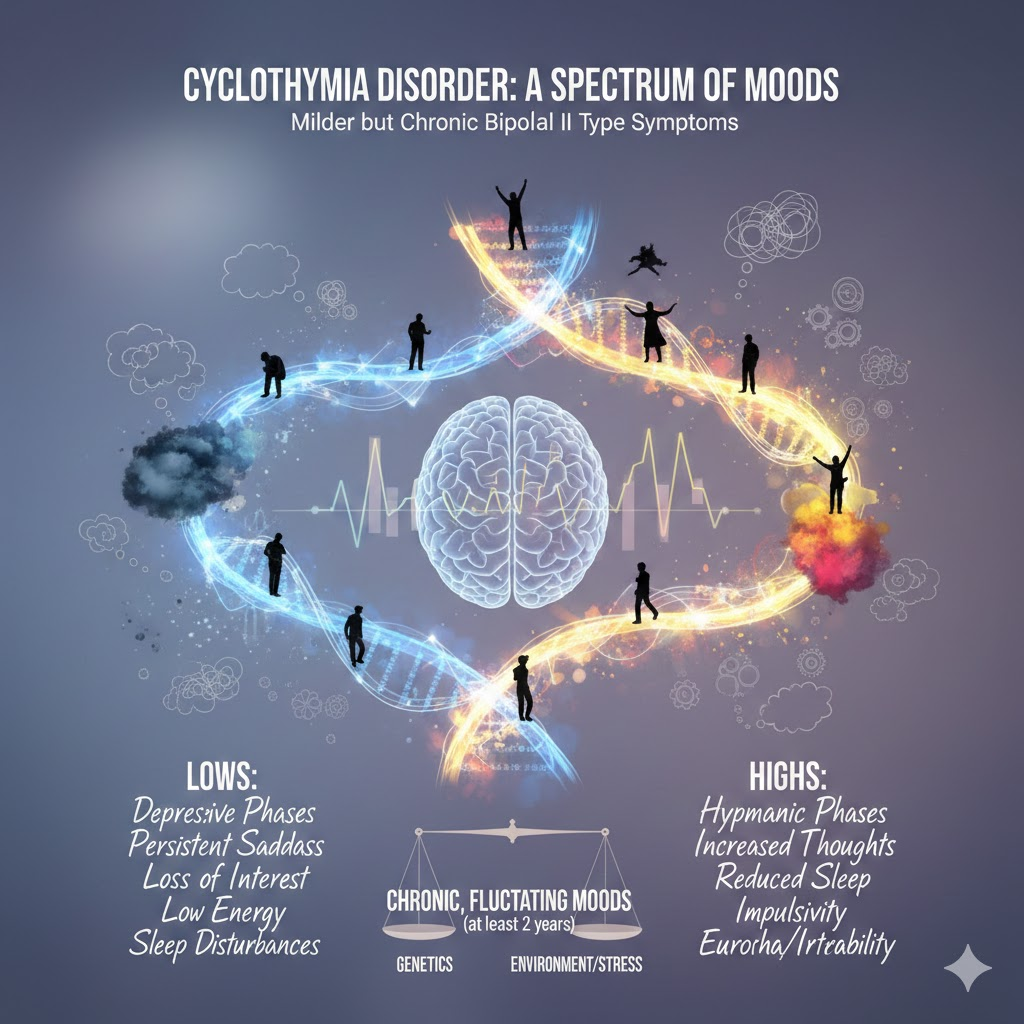

Overview
Cyclothymic disorder (cyclothymia) is a chronic, bipolar spectrum mood disorder defined by persistent, alternating periods of subsyndromal hypomanic and depressive symptoms lasting at least two years in adults (one year in children and adolescents), during which the individual has not been symptom-free for more than two months at a time and has never met full criteria for a manic, hypomanic, or major depressive episode (APA, 2022). In a mild or residual category, it is clinically misleading and has contributed to decades of underdiagnosis and mistreatment. Cyclothymia is distinct form of bipolarity, with its own temperamental substrate, substantial functional impairment, significant psychiatric comorbidity, and a clinically meaningful risk of progression to Bipolar I (BD-I) or BD-II in 15–50% of untreated cases (Bielecki & Gupta, 2023; Perugi et al., 2017). Current Neuropharmacology that cyclothymia is best understood as an exaggeration of cyclothymic temperament is a neurodevelopmental disposition characterized by intense emotional reactivity, rapid mood oscillations, interpersonal hypersensitivity, and impulsivity, rather than as a simple recurrence of low-grade mood symptoms (Perugi et al., 2017). The blog demonstrates a clinical overview of cyclothymia ranging from its burden, clinical assessment, diagnosis, treatment plan and strategies and evaluation measures.
Epidemiology
Prevalence
The lifetime prevalence of cyclothymic disorder in the general population is estimated at 0.4–1.0% based on DSM diagnostic criteria; however, broader community studies using dimensional temperament assessments suggest rates of 3–6% or higher when subthreshold presentations are included (Bielecki & Gupta, 2023). Data from 20–50% of individuals who seek clinical help for mood, anxiety, impulsive, or addictive disorders ultimately screen positive for cyclothymia after careful evaluation, suggesting substantial underrecognition in clinical settings (Perugi et al., 2017). Cyclothymia may, in fact, be the most prevalent form of bipolar spectrum disorder in community settings, though it is among the least frequently diagnosed in clinical practice (Bielecki & Gupta, 2023). As part of the broader bipolar disorder spectrum, cyclothymia contributes to the global burden of approximately 40 million people affected by bipolar disorders worldwide (Berk et al., 2025).
Patterns
Cyclothymia typically begins in adolescence or early adulthood, often before age 21, and follows a chronic, fluctuating course (APA, 2022). The disorder affects men and women in equal proportions, though women may be more likely to seek treatment (Bielecki & Gupta, 2023). No racial or ethnic predilection has been consistently identified. The condition’s onset is insidious; mood instability is often initially attributed to personality traits, interpersonal difficulties, or environmental stressors, contributing to a prolonged period before correct diagnosis. Sleep disturbances are among the most consistent and clinically important associated features, linking cyclothymia closely with circadian rhythm dysregulation (Song et al., 2024).
Determinants
Etiology
Cyclothymia is a multifactorial condition arising from the interaction of genetic predisposition, neurodevelopmental factors, and environmental stressors. Perugi et al. (2017) conceptualize cyclothymic temperament as the core etiological substrate: a heritable, neurodevelopmentally rooted disposition that manifests as extreme emotional reactivity and rapid mood oscillation, and that increases vulnerability to a wide range of psychiatric disorders.
Biological Factors
- Heritability is substantial; family studies consistently show elevated rates of bipolar spectrum disorders, cyclothymia, and affective temperaments in first-degree relatives (Bielecki & Gupta, 2023)
- Circadian rhythm disruption is a core biological mechanism: irregular sleep-wake cycles, disrupted social rhythms, and diurnal mood variability are cardinal features that link cyclothymia directly to the broader bipolar spectrum (Song et al., 2024; Perugi et al., 2017)
- Structural and functional neuroimaging findings overlap with BD-I and BD-II, including amygdala hyperreactivity and prefrontal regulatory deficits, suggesting a shared neurobiological vulnerability across the spectrum (Perugi et al., 2017)
- Mitochondrial dysfunction, oxidative stress, and inflammatory mechanisms implicated in bipolar spectrum disorders are under investigation as relevant pathophysiological pathways in cyclothymia (Berk et al., 2025)
Psychological Factors
- Cyclothymic temperament is the psychological core: emotional dysregulation characterized by intense, rapid mood changes, over-reactivity to interpersonal stimuli, and difficulty modulating behavior during emotional states (Perugi et al., 2017)
- Interpersonal hypersensitivity, abandonment anxiety, and separation sensitivity are prominent features that drive the overlap with Cluster B personality disorders, particularly Borderline Personality Disorder (BPD) (Perugi et al., 2017; Bateman et al., 2024)
- Childhood trauma and adverse life events intensify the expression of cyclothymic temperament and accelerate the transition toward more severe bipolar spectrum presentations
- Attachment insecurity and emotional dependency, often identified through psychotherapy, are psychologically relevant targets for treatment (Perugi et al., 2017)
Social Factors
- Social rhythm disruption — irregular sleep, unpredictable routines, and unstable interpersonal environments — is a key precipitant of mood oscillations in cyclothymia
- Stigma, misdiagnosis (most commonly as MDD, BPD, or ADHD), and consequent mistreatment are prevalent social and systemic factors that worsen prognosis (Perugi et al., 2017; Bielecki & Gupta, 2023)
- Low socioeconomic status, social instability, and lack of mental health literacy are associated with later diagnosis and poorer outcomes
Risk Factors
- Family history of bipolar spectrum disorders, cyclothymia, or affective temperament (strongest predictor)
- Cyclothymic or hyperthymic temperament in childhood or early adolescence
- History of childhood trauma, emotional neglect, or early loss
- Comorbid ADHD or neurodevelopmental disorders: cyclothymic emotional dysregulation co-occurs with ADHD, autism spectrum disorder, Tourette syndrome, and intellectual disability at rates higher than expected by chance (Perugi et al., 2017)
- Substance use disorders: cyclothymia co-occurs with substance use in a reciprocal pattern; substance use destabilizes mood and is used to self-regulate (Bielecki & Gupta, 2023)
- Antidepressant or stimulant exposure without mood stabilizer coverage can destabilize cyclothymia and accelerate progression to BD-I or BD-II (Perugi et al., 2017)
Effects on Population
Individual
Despite the ‘mild’ label, cyclothymia is associated with significant functional impairment across occupational, interpersonal, and social domains (Bielecki & Gupta, 2023). Persistent mood instability impairs concentration, decision-making, and relationship stability. The risk of progression to BD-I or BD-II is estimated at 15–50% over 10–20 years, particularly in the setting of antidepressant monotherapy, chronic stress, or untreated comorbidities (Perugi et al., 2017). Suicide risk is clinically meaningful: impulsivity, mixed mood states, substance use comorbidity, and interpersonal crises combine to elevate risk in a population that is frequently unrecognized and under-treated (Bielecki & Gupta, 2023). The risk is compounded when cyclothymia co-occurs with BPD features, as both conditions are independently associated with suicidal behavior (Bateman et al., 2024).
Family
Families of individuals with cyclothymia are frequently puzzled and exhausted by the unpredictability of mood and behavior, particularly because symptoms are often attributed to personality or willfulness rather than a recognized clinical condition. Interpersonal hypersensitivity and emotional reactivity strain intimate relationships, and family members may inadvertently serve as environmental triggers. Children in the household are at elevated risk for mood and anxiety disorders. Family psychoeducation and family-focused interventions have demonstrated benefit in the broader bipolar spectrum and are applicable to cyclothymia (Levrat et al., 2024; Miklowitz et al., 2021).
Community
Cyclothymia contributes substantially to community-level psychiatric and socioeconomic burden through elevated rates of mood disorder comorbidity, emergency mental health presentations, substance use, occupational absenteeism, and relationship instability. Between 20–50% of individuals presenting to outpatient psychiatric settings with mood, anxiety, impulse control, or substance use disorders may have undetected cyclothymia (Perugi et al., 2017). The disorder’s frequent misdiagnosis as recurrent depression or personality disorder leads to inappropriate antidepressant prescribing, which may accelerate cycling, increase mixed states, and ultimately worsen the long-term trajectory (Perugi et al., 2017; Bielecki &; Gupta, 2023).
Assessment
Symptom Severity Assessment Tools
Preclinical / Screening
The Cyclothymic Hypersensitivity Questionnaire (CHQ) and the Temperament Evaluation of the Memphis, Pisa, Paris, and San Diego Auto-questionnaire (TEMPS-A) are the most validated instruments for screening cyclothymic temperament and are recommended in research and clinical settings to identify sub-threshold presentations (Perugi et al., 2017; Bielecki & Gupta, 2023). The TEMPS-A assesses five affective temperaments (depressive, cyclothymic, hyperthymic, irritable, and anxious) and has demonstrated sufficient reliability and validity in both clinical and non-clinical samples. The Mood Disorder Questionnaire (MDQ) and Hypomania Checklist-32 (HCL-32) are useful supplements given cyclothymia’s position on the bipolar spectrum, though they may miss presentations dominated by emotional dysregulation rather than discrete hypomanic episodes (Berk et al., 2025). The PHQ-9 is not adequate as a standalone cyclothymia screen as it does not capture the hypomanic or mixed features central to the condition. A thorough longitudinal history — spanning at least 2 years and ideally including a reliable collateral informant — is essential.
Clinical — Mental Status Examination (MSE)
The MSE in cyclothymia must be attuned to the subtleties of emotional dysregulation and mood oscillation rather than discrete, criterion-meeting episodes. Key domains include:
- Appearance; Behaviour: Variable across visits — increased energy, decreased grooming, slight disinhibition during hypomanic phases; psychomotor slowing, reduced eye contact, and flat affect during depressive phases; the clinician should document variability across time
- Speech: Slightly accelerated or more spontaneous during hypomanic phases; slowed or sparse during depressive phases; normal or variable between phases
- Mood &; Affect: Labile, frequently cycling between mild elevation and mild depression; mood often reactive to interpersonal events; irritability common; dysphoric mixed states (low mood with increased energy or agitation) are diagnostically important (Perugi et al., 2017)
- Thought Form: Mild acceleration during hypomanic phases; ruminative or slowed during depressive phases; no formal thought disorder
- Thought Content: Mild grandiosity or over-confidence during upswings; self-criticism, hopelessness, or passive death wishes during depressive phases; impulsive cognitions (spending, sexual risk-taking, confrontational behavior) during mixed or hypomanic states
- Perceptions: Hallucinations and delusions are absent by diagnostic definition; their presence mandates reconsideration of the diagnosis (APA, 2022)
- Cognition: Distractibility during hypomanic phases; concentration and memory difficulties during depression; neurocognitive deficits may persist in euthymia and should be formally assessed when functional impairment is disproportionate to current mood state
- Insight and Judgment: Typically partial or variable; many patients have minimal insight into the cyclical nature of their mood, particularly the hypomanic phases, which are often experienced as normal or even preferred states
The Cyclothymia Interview, developed by Hantouche and colleagues and referenced in Perugi et al. (2017), is a structured clinical interview specifically designed for cyclothymia that captures temperamental features, mixed states, interpersonal sensitivity, and comorbidity patterns that are frequently missed in standard mood disorder assessments.
Post-Clinical / Monitoring
Life chart methodology — systematic, prospective tracking of daily mood, energy, sleep, and significant life events — is particularly valuable in cyclothymia given the chronicity and subtlety of mood oscillations, and is recommended throughout the course of treatment (Perugi et al., 2017; Keramatian et al., 2023). Sleep diary monitoring is a core component of assessment and monitoring, given the primacy of circadian rhythm disruption in cyclothymia (Song et al., 2024). Digital mood-monitoring applications are emerging as practical adjuncts to self-report for this population (Levrat et al., 2024). Regular collateral re-assessment (family or partner) is clinically valuable given limited illness insight in many patients.
Diagnosis
DSM-5-TR Diagnostic Criteria for Cyclothymic Disorder (APA, 2022)
Cyclothymia is a formal DSM-5-TR diagnosis within the Bipolar and Related Disorders category. All six criteria must be met simultaneously. Correct diagnosis requires a longitudinal perspective across at least two years; a single cross-sectional evaluation is insufficient.
- Criterion A — Chronicity of Subsyndromal Mood Cycling
For at least 2 years (at least 1 year in children and adolescents), the individual has experienced numerous periods with hypomanic symptoms that do not meet criteria for a hypomanic episode AND numerous periods with depressive symptoms that do not meet criteria for a major depressive episode. The core feature is the persistent alternation between subthreshold states — neither pole meeting full diagnostic criteria.
- Criterion B — Continuity
During the above 2-year period (1 year in children/adolescents), the hypomanic and depressive periods have been present for at least half the time, and the individual has not been without symptoms for more than 2 consecutive months at a time. Symptom-free intervals >2 months disqualify the diagnosis and suggest an alternative or additional diagnosis.
Criteria for a major depressive episode, manic episode, or hypomanic episode have NEVER been met. This is the defining diagnostic boundary: if any full episode is identified (past or present), the diagnosis upgrades to BD-I (if manic) or BD-II (if hypomanic + major depressive), and cyclothymic disorder is no longer the appropriate primary diagnosis (APA, 2022).
Criterion D — Clinically Significant Distress or Functional Impairment
The symptoms in Criterion A cause clinically significant distress or impairment in social, occupational, or other important areas of functioning. Cyclothymia is not a subclinical temperament state — it requires demonstrable functional impact to meet diagnostic threshold.
Criterion E — Not Substance- or Medical Condition-Induced
The disturbance is not better explained by the physiological effects of a substance (e.g., drugs of abuse, medications) or another medical condition (e.g., hyperthyroidism, epilepsy).
Criterion F — Not Better Explained by Another Mental Disorder
The symptoms are not better explained by another mental disorder (e.g., schizoaffective disorder, schizophrenia, schizophreniform disorder, delusional disorder, other specified or unspecified schizophrenia spectrum or other psychotic disorder). Differential diagnosis with BPD, ADHD, and recurrent MDD is particularly important and clinically challenging.
Specifiers
With anxious distress: Applicable when prominent anxiety symptoms co-occur, which is common in cyclothymia given the high comorbidity with anxiety disorders (Perugi et al., 2017). Differential Diagnosis
Bipolar I Disorder (BD-I)
BD-I requires at least one full manic episode (distinct, lasting ≥1 week, causing marked impairment or requiring hospitalization). If any such episode has occurred, cyclothymic disorder is no longer the correct diagnosis. A thorough longitudinal history is essential; patients with cyclothymia may retrospectively describe a manic episode as simply a ‘very good period’ or attribute it to external events. Collateral history is invaluable (APA, 2022).
Bipolar II Disorder (BD-II)
BD-II requires a full hypomanic episode (at least 4 days, with observable functional change but without marked impairment) AND a full major depressive episode. In cyclothymia, neither threshold is ever met. If a patient with a cyclothymia diagnosis subsequently experiences a full episode of either kind, the diagnosis must be upgraded accordingly. BD-II also requires a depression-predominant course, whereas cyclothymia is more symmetrical in its oscillations (APA, 2022; Berk et al., 2025).
Borderline Personality Disorder (BPD)
BPD is the most clinically significant and conceptually challenging differential diagnosis for cyclothymia. The overlap is substantial: both involve emotional instability, impulsivity, interpersonal hypersensitivity, self-harm, and identity disturbance. Key distinctions: (1) In cyclothymia, mood oscillations follow a relatively autonomous rhythmic pattern lasting days to weeks, independent of interpersonal triggers; in BPD, affective shifts are rapid (minutes to hours) and directly tied to perceived interpersonal rejection or abandonment. (2) Cyclothymia involves changes in energy, activity, and sleep need consistent with the bipolar spectrum; BPD does not. (3) BPD is associated with a pervasive, chronic pattern of identity instability from early life; cyclothymia is defined by episodic, fluctuating mood states (Bateman et al., 2024).
Major Depressive Disorder (MDD) and Persistent Depressive Disorder (Dysthymia)
MDD presents with full major depressive episodes without hypomanic or manic features; cyclothymia by definition never meets full MDD episode criteria. Persistent depressive disorder (PDD/dysthymia) is characterized by a chronically depressed mood without hypomanic oscillations. Key distinction: cyclothymia involves alternating subsyndromal hypomanic and depressive periods; dysthymia involves sustained, non-cycling low mood. The two conditions can co-occur (‘double depression’ equivalent), but the presence of recurrent, identifiable hypomanic periods, however mild, should prompt cyclothymia consideration and screen-positive follow-up (APA, 2022).
Attention-Deficit/Hyperactivity Disorder (ADHD)
ADHD and cyclothymia share distractibility, impulsivity, emotional dysregulation, and restlessness. Key distinction: ADHD is a chronic, non-episodic neurodevelopmental disorder with onset in childhood; cyclothymia involves episodic oscillations in mood polarity. Comorbid ADHD occurs in cyclothymia at rates higher than expected by chance, and Perugi et al. (2017) propose a shared neurodevelopmental basis, including amygdala hyperreactivity and prefrontal regulatory deficits. Independent assessment and treatment of both conditions is required when comorbidity is present.
Substance-Induced Mood Disorder
Substance intoxication and withdrawal — particularly stimulants, cannabis, alcohol, and benzodiazepines — can produce mood fluctuations resembling cyclothymia. By diagnostic definition, cyclothymia is not induced by substances; however, substance use commonly complicates and obscures cyclothymic presentations, as patients often use substances to self-regulate dysphoric or hypomanic states. Cyclothymia must predate substance use or persist in its absence to warrant a primary mood disorder diagnosis (APA, 2022).
Personality Disorders (Cluster B)
Histrionic, narcissistic, and antisocial personality disorders may present with emotional reactivity, impulsivity, and instability that superficially resemble cyclothymia. The critical distinction is that personality disorders involve pervasive, ego-syntonic traits rooted in core identity and interpersonal functioning, whereas cyclothymia involves fluctuating mood and energy states with a temporal, episodic structure, however subtle (Bielecki & Gupta, 2023). Cyclothymia is a formal DSM-5-TR diagnosis within the Bipolar and Related Disorders category. All six criteria must be met simultaneously. Correct diagnosis requires a longitudinal perspective across at least two years; a single cross-sectional evaluation is insufficient.
Plan
Treatment Goals
Treatment of cyclothymia is guided by the following goals, consistent with expert clinical recommendations (Perugi et al., 2017; Bielecki &; Gupta, 2023):
- Acute stabilization: Reduce the frequency, amplitude, and distress associated with mood oscillations; address acute crises (suicidality, substance use, impulsive behavior)
- Mid-term stabilization (6–12 months): Achieve relative mood stability, defined as a decrease in the amplitude and frequency of hypomanic and depressive oscillations and improved behavioral control, not complete mood elimination (Perugi et al., 2017)
- Long-term maintenance: Prevent progression to BD-I or BD-II; optimize occupational, interpersonal, and social functioning; address comorbidities
- Temperamental reframing: Help the patient understand their mood fluctuations as a neurodevelopmental temperamental disposition rather than a character flaw, facilitating engagement with treatment and reducing self-blame (Perugi et al., 2017)
- Harm reduction: Avoid iatrogenic worsening — specifically, prevent antidepressant monotherapy, which is associated with increased cycling, mixed states, and progression to more severe bipolar presentations (Perugi et al., 2017; Bielecki & Gupta, 2023)
A key principle from Perugi et al. (2017): “go slow and stay low” — pharmacotherapy for cyclothymia should be initiated at low doses, titrated gradually, and guided by the principle of mood stabilization rather than symptom suppression.
Implementation
Psychopharmacology
There are currently no FDA-approved pharmacological treatments specifically indicated for cyclothymic disorder. Clinical management is therefore extrapolated from bipolar spectrum evidence, expert consensus, and the clinical principles outlined by Perugi et al. (2017) and Bielecki & Gupta (2023). Treatment selection is guided by the predominant symptom dimension (anxious-depressive vs. hypomanic-mixed vs. impulsive) and comorbidity profile.
First-Line Pharmacotherapy
Mood stabilizers are the pharmacological foundation of cyclothymia treatment. The choice of agent should be guided by the clinical presentation:
- Lithium: First-line for cyclothymia with prominent affective intensity, significant hypomanic or mixed features, and suicide risk; moderate evidence supports its efficacy in bipolar spectrum mood stabilization; anti-suicidal properties are particularly relevant (Bielecki & Gupta, 2023; Perugi et al., 2017; Kowalczyk et al., 2024)
- Valproate / Divalproex (low dose, 300–600 mg/day): First-line when mixity, mood reactivity, and anxious agitation are the dominant features; supports mood stabilization without the sedation risk of higher doses; requires metabolic monitoring and is contraindicated in women of reproductive age due to teratogenicity (Perugi et al., 2017; Kowalczyk et al., 2024)
- Lamotrigine: First-line when the anxious-depressive polarity predominates; evidence from BD-II depression trials is applicable and it is well-tolerated; titrate slowly to reduce rash risk (Bielecki & Gupta, 2023; Haenen et al., 2024)
Second-Line Pharmacotherapy
- Low-dose atypical antipsychotics (quetiapine, olanzapine): Useful for short-term management of agitation, mixed states, and sleep dysregulation; long-term use should be limited given metabolic risks; evidence extrapolated from BD-I and BD-II trials (Kowalczyk et al., 2024; Keramatian et al., 2023)
- Carbamazepine or oxcarbazepine: Alternative mood stabilizers with anticonvulsant properties; evidence in cyclothymia is limited but applicable from the broader bipolar spectrum
- Adjunctive benzodiazepines (short-term only): For acute agitation, sleep-onset difficulties, or hypomanic destabilization; not appropriate for maintenance given risks of dependence and mood destabilization on withdrawal
Third-Line and Adjunctive Options
- Antidepressants (SSRIs, SNRIs): Should be used only after failure of mood stabilizers, only in combination with mood stabilizer coverage, and only for short treatment periods; antidepressant monotherapy in cyclothymia is associated with cycling acceleration and progression to more severe bipolarity and is explicitly contraindicated by Perugi et al. (2017) and Bielecki & Gupta (2023)
- Omega-3 fatty acids (EPA-dominant formulations): Preliminary evidence as mood-stabilizing adjuncts; well tolerated and may be considered as adjunct to standard treatment (Keramatian et al., 2023)
- Important note: The principle of “go slow and stay low” (Perugi et al., 2017) is fundamental to cyclothymia pharmacotherapy. Patients with cyclothymia are often highly sensitive to medications, including paradoxical activating effects of antidepressants and antipsychotics, and side effects frequently drive premature discontinuation. Starting at sub-therapeutic doses and titrating gradually while monitoring mood diary data is the recommended approach.
Psychotherapy
Psychotherapy is an essential and equal partner to pharmacotherapy in cyclothymia — arguably more central than in BD-I given the temperamental and interpersonal core of the disorder. The therapeutic relationship itself must account for the patient’s high interpersonal sensitivity and tendency to experience rejection in the clinician relationship (Perugi et al., 2017).
Individual
- Psychoeducation (Individual): The most foundational psychotherapy intervention for cyclothymia; must begin early in treatment. Targets: illness recognition and naming, understanding the cyclothymic temperament, medication adherence rationale, early warning sign identification, and the importance of routine and sleep hygiene. Evidence from the bipolar spectrum strongly supports psychoeducation’s impact on relapse reduction and treatment engagement (Levrat et al., 2024). Perugi et al. (2017) describe a structured six-session individual psychoeducation model specifically adapted for cyclothymia, covering illness education, mood monitoring, early relapse strategies, psychological vulnerability mapping (emotional dependency, rejection sensitivity), cognitive patterns linked to mood oscillation, and interpersonal conflict management
- Cognitive Behavioural Therapy (CBT): Addresses maladaptive cognitive schemas, behavioral activation patterns, sleep hygiene, and relapse prevention; evidence from the bipolar spectrum supports its use for both depressive and mood instability symptoms; particularly effective when combined with pharmacotherapy (Miklowitz et al., 2021; Nakagawa et al., 2022)
- Interpersonal and Social Rhythm Therapy (IPSRT): Directly targets circadian dysregulation — the biological core of cyclothymia — by stabilizing social rhythms (sleep-wake cycles, mealtimes, daily activity structure) and addressing interpersonal problem areas; systematic review evidence supports IPSRT for mood stabilization in bipolar spectrum disorders, with particular applicability to cyclothymia given the centrality of circadian disruption (Aktaş, 2024)
- Dialectical Behaviour Therapy (DBT): Particularly indicated when emotional dysregulation is severe, when BPD features co-occur, or when self-harm and suicidal behavior are present; DBT skills (distress tolerance, emotion regulation, mindfulness, interpersonal effectiveness) directly target the emotional reactivity that is the temperamental core of cyclothymia; a 2023 systematic review confirmed DBT’s effectiveness for mood symptoms in bipolar spectrum disorders and highlighted its applicability to cyclothymia (Perich et al., 2023)
Group
- Group Psychoeducation: Structured group programs provide illness education, peer normalization, and shared relapse prevention strategies; a 2022 meta-analysis confirmed that adjunctive group psychoeducation significantly reduced relapse rates in bipolar spectrum disorders (Bhatt et al., 2022); the group format offers additional therapeutic benefit through reduced isolation and shared experience of a frequently misunderstood condition
- Family-Focused Therapy (FFT): Three-phase structured intervention (psychoeducation, communication enhancement training, problem-solving) for individual and family; network meta-analysis shows FFT has the highest efficacy for recurrence prevention among psychotherapy modalities in the bipolar spectrum (Miklowitz et al., 2021); particularly valuable in cyclothymia given the interpersonal sensitivity and family system disruption associated with the disorder
Complementary and Interprofessional Care
Nursing
Psychiatric nurses occupy a central role in cyclothymia management across all settings. Core nursing functions include: medication education and adherence monitoring (particularly important given the sensitivity of cyclothymic patients to pharmacological effects and their tendency toward early self-discontinuation); psychoeducation delivery; MSE monitoring with attention to subtle shifts in mood, energy, and sleep at each clinical encounter; safety assessment and evidence-based safety planning given the elevated impulsive suicide and self-harm risk; and proactive early warning sign surveillance. Collaborative care models with nurse care managers reduce the fragmentation of care that commonly affects this underdiagnosed population (Keramatian et al., 2023). Nurses should be specifically trained to recognize cyclothymia as distinct from BPD and MDD to reduce diagnostic misclassification.
Nutrition
Nutritional considerations in cyclothymia are clinically relevant and underappreciated. Irregular eating patterns, appetite changes across mood phases, and the metabolic effects of mood stabilizers (weight gain with valproate, lithium-induced hypothyroidism affecting weight) all require monitoring. Registered dietitian involvement is recommended for metabolic monitoring and individualized nutritional counselling. Omega-3 fatty acid supplementation (EPA-dominant) has preliminary mood-stabilizing evidence and is well-tolerated; caffeine restriction is particularly relevant given its effects on sleep onset and circadian rhythm integrity (Song et al., 2024). Alcohol and illicit substance avoidance should be a consistent nutritional and lifestyle counselling priority given the high co-occurrence of cyclothymia and substance use disorders.
Physiotherapy
Structured, regular aerobic exercise is a clinically meaningful adjunct to pharmacotherapy and psychotherapy in cyclothymia. Exercise stabilizes mood, improves sleep quality, regularizes circadian rhythms (directly addressing a core pathophysiological mechanism), and reduces anxiety, all of which are clinically relevant in cyclothymia (Song et al., 2024). A minimum of 150 minutes of moderate-intensity aerobic activity per week is recommended. Physiotherapists can provide individualized exercise programming that accommodates the fluctuating energy of cyclothymia, helping patients develop activity plans that are feasible during both hypomanic and depressive phases rather than all-or-nothing patterns that mirror mood oscillations.
Social Work
Social workers address the structural and psychosocial determinants of health that disproportionately affect patients with cyclothymia: occupational instability, relationship dysfunction, financial difficulties, housing challenges, and legal involvement secondary to impulsive behavior during hypomanic phases. Core clinical functions include: safety planning for suicidal crises; crisis intervention; case management and community system navigation; connection to disability supports and income assistance; advocacy for accurate diagnosis in settings where cyclothymia is dismissed or conflated with personality disorder; and support for families who are often unseen caregivers of a person with a chronically fluctuating but officially ‘minor’ condition. Social rhythm stabilization counseling — addressing employment, housing, and relationship stability as rhythm-supporting interventions — is a practical contribution to IPSRT goals.
Occupational Therapy
Occupational therapists address the often considerable but underrecognized functional impairment associated with cyclothymia. Even subsyndromal mood cycling disrupts occupational performance, particularly in tasks requiring sustained concentration, planning, and social interaction. OT interventions include: activity scheduling and energy management across mood phases; sleep hygiene structuring; vocational assessment and rehabilitation; environmental modification to reduce stimulation and support routine; and development of individualized ‘social rhythms’ (structured daily routines) that directly support the biological rhythm stabilization targeted by IPSRT. Regular occupational functioning assessment (e.g., WHODAS 2.0) is recommended to quantify and monitor functional recovery over time.
Evaluation
Prognosis
Cyclothymia follows a chronic, fluctuating course. Without adequate treatment, prognosis is frequently worse than initially anticipated: 15–50% of patients with cyclothymia will develop BD-I or BD-II over their lifetime, with the conversion risk highest in those exposed to antidepressant monotherapy, high comorbidity burden, or chronic psychosocial stress (Perugi et al., 2017; Bielecki & Gupta, 2023). Key prognostic indicators include:
- Negative prognosticators: Antidepressant monotherapy exposure, substance use comorbidity, comorbid ADHD or BPD features, childhood trauma history, high number of prior mood oscillations, poor social support, and poor medication adherence
- Positive prognosticators: Early correct diagnosis, sustained mood stabilizer adherence, engagement in IPSRT or structured psychoeducation, stable social rhythms and sleep patterns, strong interpersonal support, and absence of comorbid substance use
Suicide risk requires explicit reassessment at every clinical encounter. Impulsivity, mixed mood states, and substance use comorbidity combine to create periods of elevated risk that may not be immediately apparent from a mood severity scale alone. Perugi et al. (2017) emphasize that early recognition and targeted treatment — including mood stabilizers and psychoeducation — fundamentally changes the longitudinal prognosis, with sustained improvement observed particularly in patients who have never been exposed to antidepressant monotherapy.
Follow-Up
Given the chronic nature of cyclothymia and the subtlety of its symptom fluctuations, structured longitudinal follow-up is essential:
- Frequency: Monthly visits during the first 6–12 months of treatment; subsequently every 1–3 months depending on stability; more frequent contact during periods of psychosocial stress or medication adjustment
- Mood chart review at every visit: Document polarity, frequency, amplitude, and duration of mood shifts; compare to baseline; use this to refine the pharmacotherapy approach over time (Perugi et al., 2017)
- Sleep diary and social rhythm review: Assess regularity of sleep-wake cycles and daily routines at every visit given their central role in cyclothymia (Song et al., 2024)
- Lithium monitoring (if prescribed): Serum levels every 3–6 months; TSH and eGFR every 6–12 months
- Metabolic monitoring for any second-generation antipsychotic: Fasting glucose, lipids, weight, and blood pressure every 3 months initially then annually
- Lamotrigine: No required serum levels; vigilant monitoring for rash during titration phase
- Comorbidity monitoring: Screen for emerging substance use disorders, anxiety escalation, and ADHD symptom worsening at each visit
- Suicide risk assessment at every encounter: Do not normalize suicidality given the disorder’s ‘mild’ label
Long-term maintenance pharmacotherapy is recommended in patients with significant functional impairment, comorbidity, or history of mood episode upgrade, and should be revisited collaboratively with the patient as their insight and therapeutic alliance develop over time.
Referral
Consider referral to or consultation with:-
- Psychiatrist: For diagnostic confirmation (particularly in complex presentations with BPD or ADHD co-occurrence), initiation of mood stabilizers, and treatment-resistant presentations
- Neuropsychologist: For formal neurocognitive assessment when persistent cognitive impairment affects occupational functioning, particularly when ADHD comorbidity is suspected
- Addiction medicine or concurrent disorders program: When substance use disorder is a significant comorbidity, given its high prevalence and impact on cyclothymia prognosis
- DBT program: When severe emotional dysregulation, self-harm, or co-occurring BPD features are present and exceed the scope of standard bipolar spectrum psychotherapy
- Perinatal psychiatry: For reproductive planning, given the teratogenicity of valproate (absolutely contraindicated) and the need for mood stabilizer management planning during pregnancy and the postpartum period
- Endocrinology: If hypothyroidism (from lithium) or metabolic syndrome (from antipsychotics or valproate) requires specialist co-management
Red Flags
The following require urgent or emergent clinical response:-
- Active suicidal ideation with plan, intent, or recent attempt — do not minimize risk based on the ‘subthreshold’ severity of cyclothymia; impulsivity and mixed mood states create acute windows of suicide risk that require immediate safety assessment and evidence-based safety planning
- Escalation of mood beyond cyclothymia thresholds: New manic episode (BD-I upgrade) or first full hypomanic episode plus major depression (BD-II upgrade) — requires immediate psychiatric reassessment and treatment intensification
- Antidepressant-induced mood destabilization: New or worsening mixed states, increased cycling frequency, or agitated dysphoria following antidepressant initiation or dose increase — requires immediate reassessment of the treatment plan and consideration of antidepressant taper
- Lithium toxicity: Serum >1.5 mEq/L; coarse tremor, ataxia, vomiting, confusion — a medical emergency
- Lamotrigine-associated rash: Any new rash during lamotrigine titration requires immediate cessation and urgent evaluation for Stevens-Johnson syndrome
- Valproate-induced hyperammonemic encephalopathy: Confusion, lethargy, vomiting at any dose — requires immediate investigation and cessation
- Severe impulsive behavior (e.g., substance overdose, self-harm, dangerous risk-taking) during a mixed or hypomanic phase — may require urgent crisis stabilization, hospitalization, or intensive community support
- Pregnancy in a patient on valproate — absolute teratogen; urgent perinatal psychiatry and obstetric consultation required
References
- Aktaş, Y. (2024). Effectiveness of interpersonal social rhythm therapy applied to individuals with bipolar disorder. Journal of Psychiatric Nursing, 15(1), 81–92. https://doi.org/10.14744/phd.2024.26428
- American Psychiatric Association. (2022). Diagnostic and statistical manual of mental disorders (5th ed., text rev.). https://doi.org/10.1176/appi.books.9780890425787
- Bateman, A. W., Gunderson, J., & Mulder, R. (2024). Borderline personality disorder: A comprehensive review of diagnosis and clinical presentation, etiology, treatment, and current controversies. World Psychiatry, 23(1), 4–25. https://doi.org/10.1002/wps.21156
- Berk, M., Corrales, A., Trisno, R., Dodd, S., Yatham, L. N., Vieta, E., McIntyre, R. S., Suppes, T., & Agustini, B. (2025). Bipolar II disorder: A state-of-the-art review. World Psychiatry, 24(2), 175–189. https://doi.org/10.1002/wps.21300
- Bhatt, J., Kaur, A., Awasthi, P., et al. (2022). A meta-analysis of group cognitive behavioral therapy and group psychoeducation for treating symptoms and preventing relapse in people living with bipolar disorder. Healthcare, 10(11), 2288. https://doi.org/10.3390/healthcare10112288
- Bielecki, J. E., & Gupta, V. (2023). Cyclothymic disorder. In StatPearls. StatPearls Publishing. https://www.ncbi.nlm.nih.gov/books/NBK557877/
- Haenen, N., Kamperman, A. M., Prodan, A., Nolen, W. A., Boks, M. P., & Wesseloo, R. (2024). The efficacy of lamotrigine in bipolar disorder: A systematic review and meta-analysis. Bipolar Disorders, 26(5), 431–441. https://doi.org/10.1111/bdi.13452
- Keramatian, K., Chithra, N. K., & Yatham, L. N. (2023). The CANMAT and ISBD guidelines for the treatment of bipolar disorder: Summary and a 2023 update of evidence. Focus, 21(4), 394–416. https://doi.org/10.1176/appi.focus.20230009
- Kowalczyk, E., Koziej, S., & Soroka, E. (2024). Advances in mood disorder pharmacotherapy: Evaluating new antipsychotics and mood stabilizers for bipolar disorder and schizophrenia. Medical Science Monitor, 30, e945412. https://doi.org/10.12659/MSM.945412
- Levrat, V., Favre, S., & Richard-Lepouriel, H. (2024). Current practices of psychoeducation interventions with persons with bipolar disorders: A literature review. Frontiers in Psychiatry, 14, 1320654. https://doi.org/10.3389/fpsyt.2023.1320654
- Miklowitz, D. J., Efthimiou, O., Furukawa, T. A., Scott, J., McLaren, R., Geddes, J. R., & Cipriani, A. (2021). Adjunctive psychotherapy for bipolar disorder: A systematic review and component network meta-analysis. JAMA Psychiatry, 78(2), 141–150. https://doi.org/10.1001/jamapsychiatry.2020.2993
- Nakagawa, A., Sado, M., Mitsuda, D., Fujisawa, D., Kikuchi, T., Abe, T., & Mimura, M. (2022). Effectiveness of cognitive behavioural therapy augmentation of pharmacotherapy in reducing depressive symptoms in patients with bipolar I or II disorder: Meta-analysis of randomized controlled trials. Frontiers in Psychiatry, 12, 781583. https://doi.org/10.3389/fpsyt.2021.781583
- Perich, T., Lala, F., & Moores, E. (2023). A systematic review on the effectiveness of dialectical behavior therapy for improving mood symptoms in bipolar disorders. International Journal of Bipolar Disorders, 11, 6. https://doi.org/10.1186/s40345-023-00288-6
- Perugi, G., Hantouche, E., & Vannucchi, G. (2017). Diagnosis and treatment of cyclothymia: The “primacy” of temperament. Current Neuropharmacology, 15(3), 372–379. https://doi.org/10.2174/1570159X14666160616120157
- Song, Y. M., Jeong, J., De Los Reyes, A. A., Lim, D., Cho, C., Yeom, J. W., Lee, T., Lee, J., Lee, H., & Kim, J. K. (2024). Causal dynamics of sleep, circadian rhythm, and mood symptoms in patients with major depression and bipolar disorder: Insights from longitudinal wearable device data. EBioMedicine, 103, 105094. https://doi.org/10.1016/j.ebiom.2024.105094